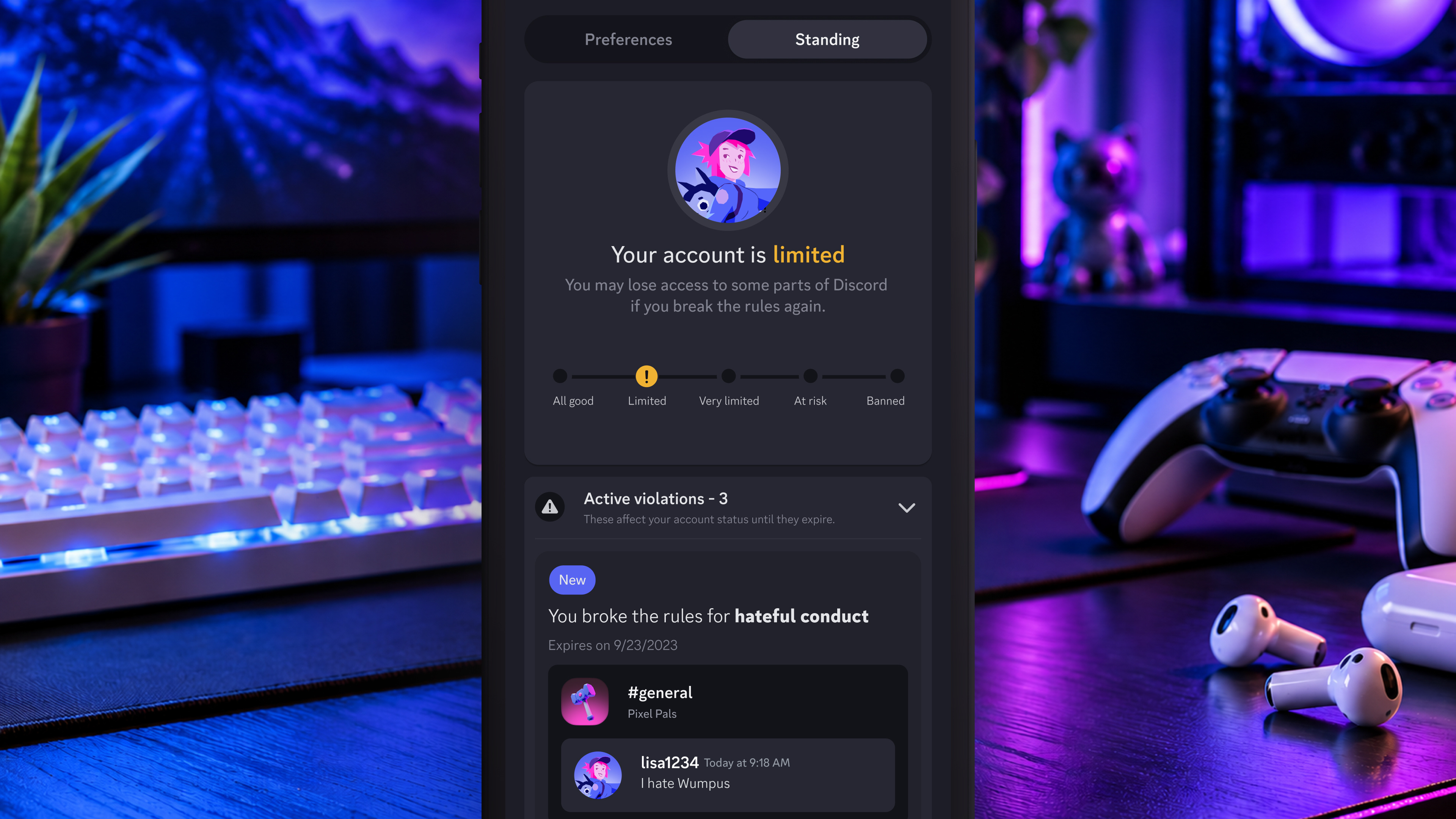
Reframing enforcement as education.
Designed the end-to-end Warning System, Account Standing, and Appeals experiences, including the content strategy.
End-to-end user flows, interaction patterns, content strategy, responsive UI, design specifications.
Discord’s old enforcement system was simple: break the rules enough times and eventually lose your account. But it gave people little understanding of what they’d done wrong, where their account stood, or how to avoid making the same mistake again.
New EU regulations required us to make enforcement more transparent. We used that mandate to rethink the experience entirely. Instead of treating every violation as another step toward punishment, we created a graduated Warning System that shows people what happened, explains the policy behind it, makes the consequences clear, and gives them a path back to good standing.
The system launched ahead of the EU deadline and contributed to a 9% decrease in bans, or roughly 6,000 fewer bans per month, with no increase in appeal volume. More than 75% of affected users viewed their violation details, suggesting that when people were given context, they actually wanted to understand it.
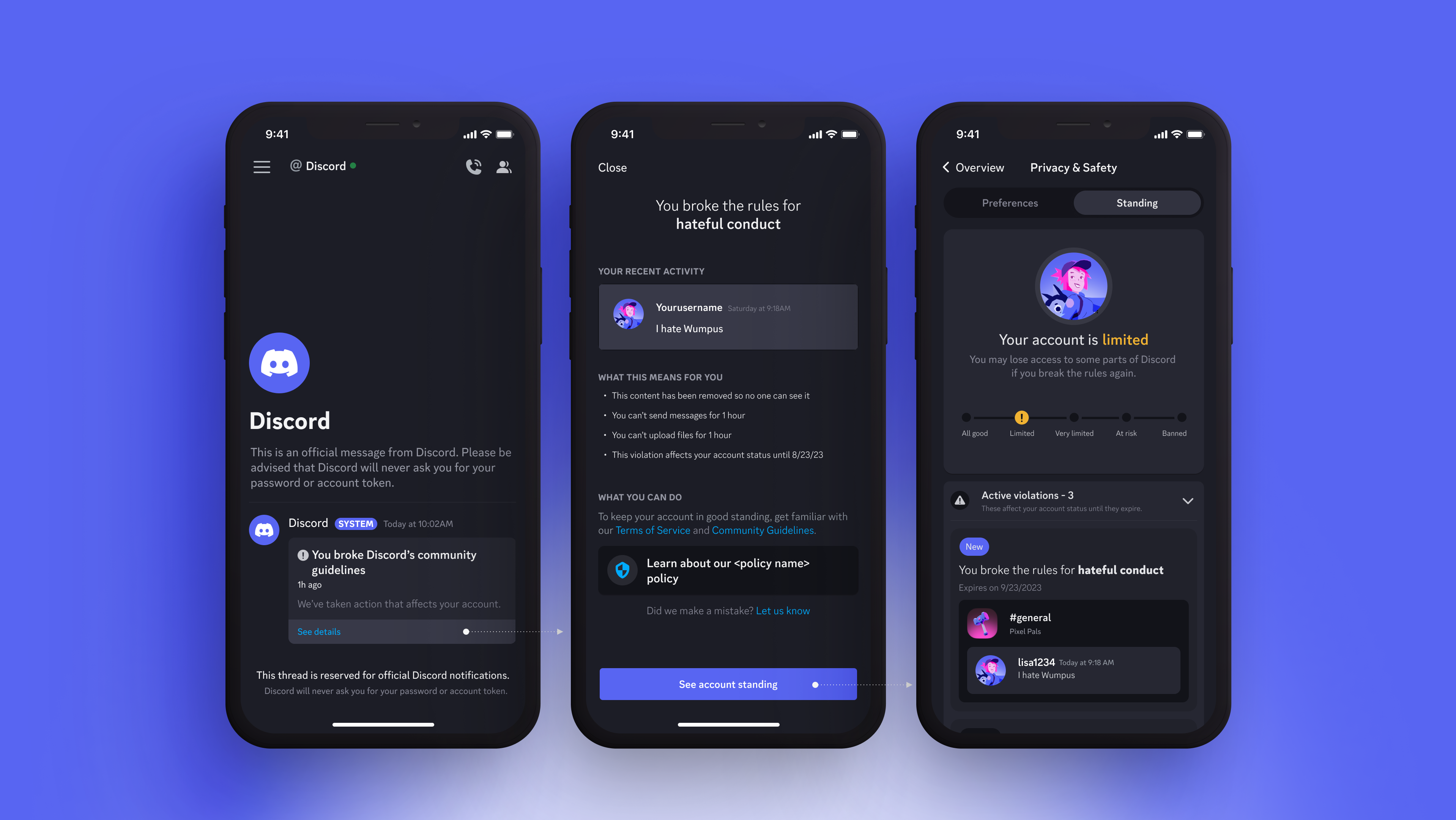
We needed a model that did more than keep score. Each violation became an opportunity to explain the boundary someone had crossed and what they could do differently next time.
Behind that experience were complex policy rules, account states, consequences, and appeals. We brought them together into one clear path based on conversations with users who found themselves on the wrong side of Discord’s policies: what happened → why it happened → what it means → what comes next.
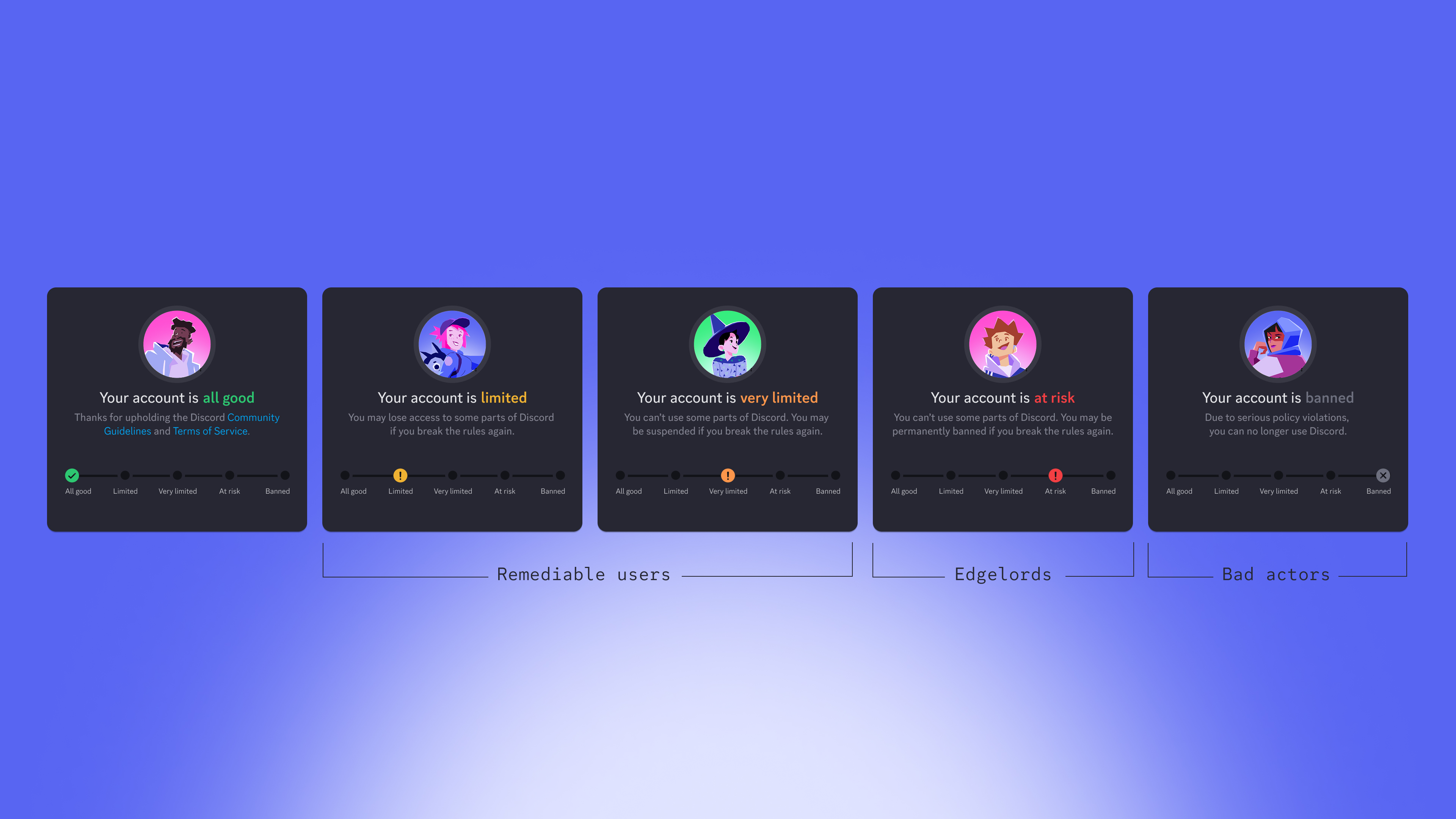
Someone making a mistake shouldn’t be treated the same as a bad actor repeatedly causing harm. We designed graduated consequences that could escalate with continued violations, while allowing people to recover. Account Standing made that path visible: where they stood, what their violations meant, and how their standing could improve.
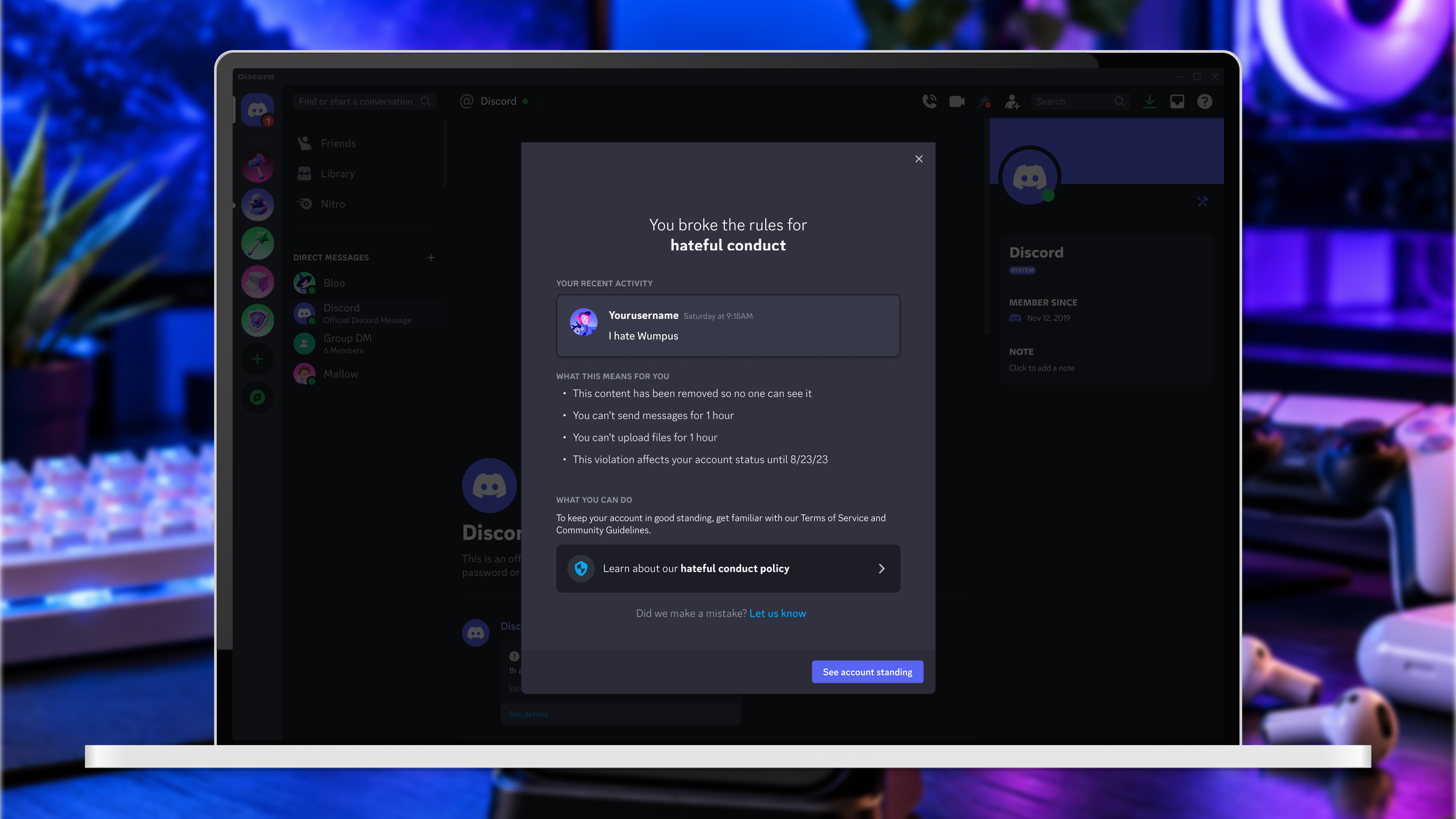
A warning only helps if someone understands what triggered it. I defined how violation details brought together the relevant content, the policy it broke, and the consequences. That meant balancing enough context to make the decision understandable with care around how violating content was shown.
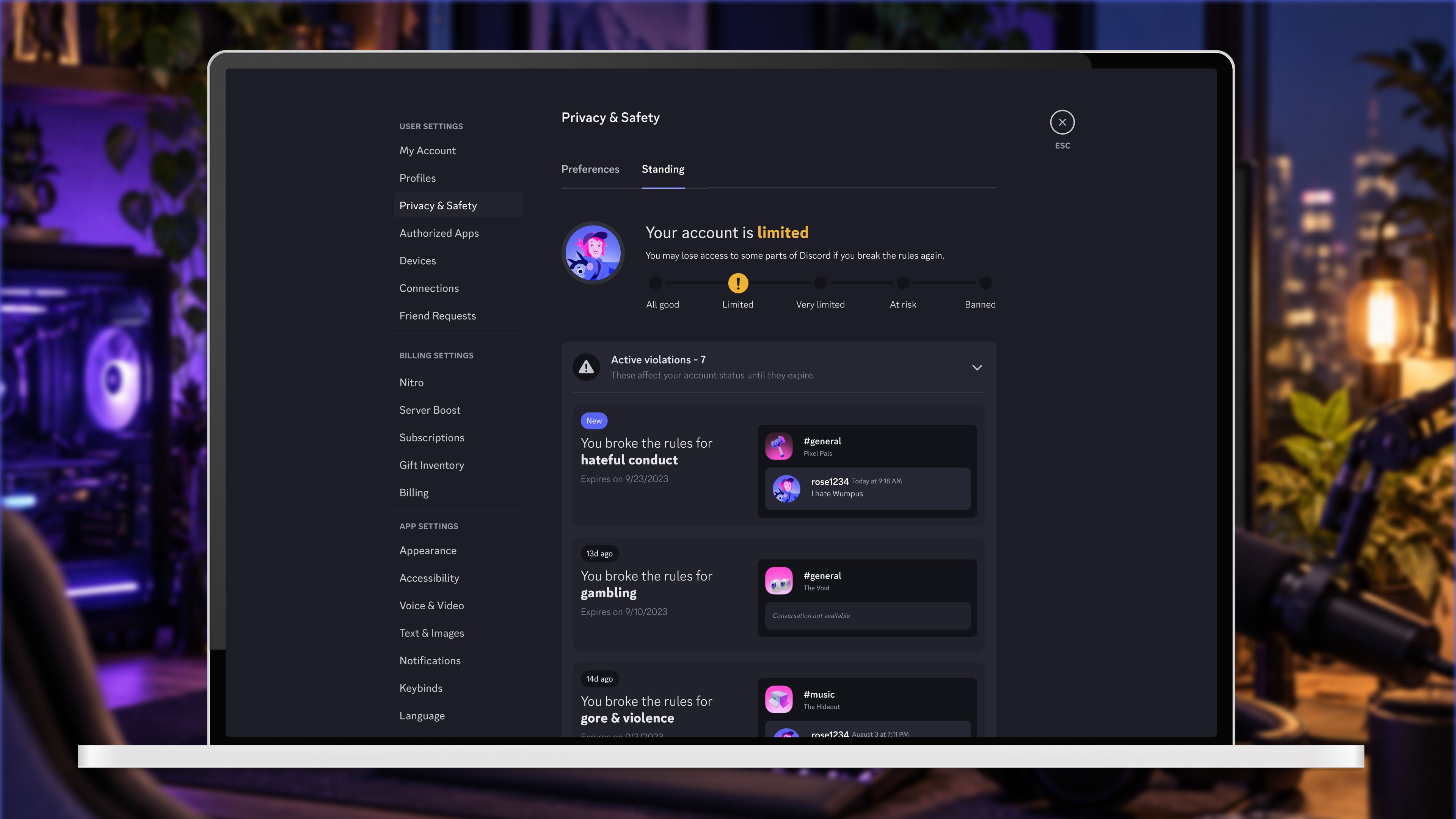
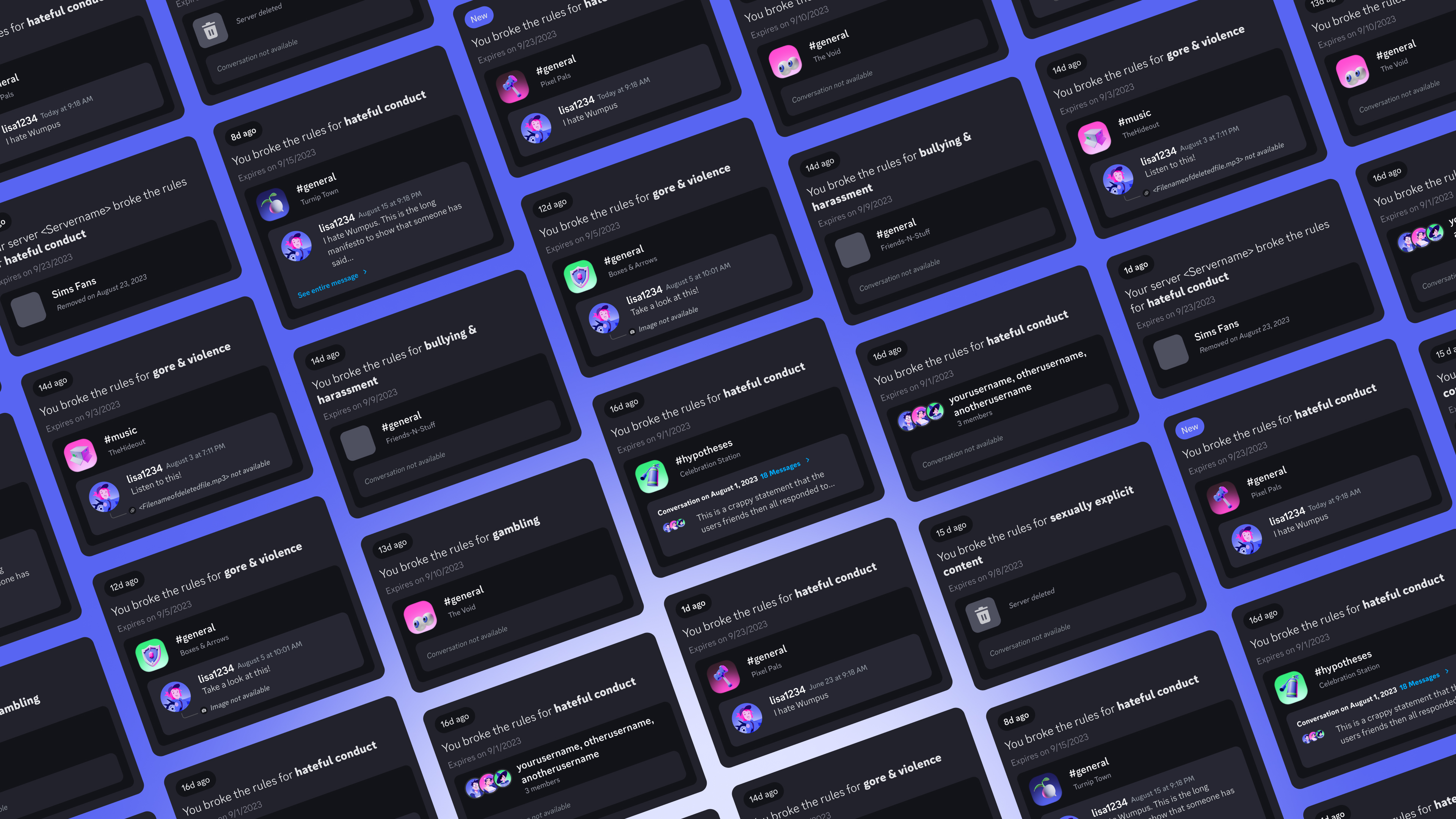
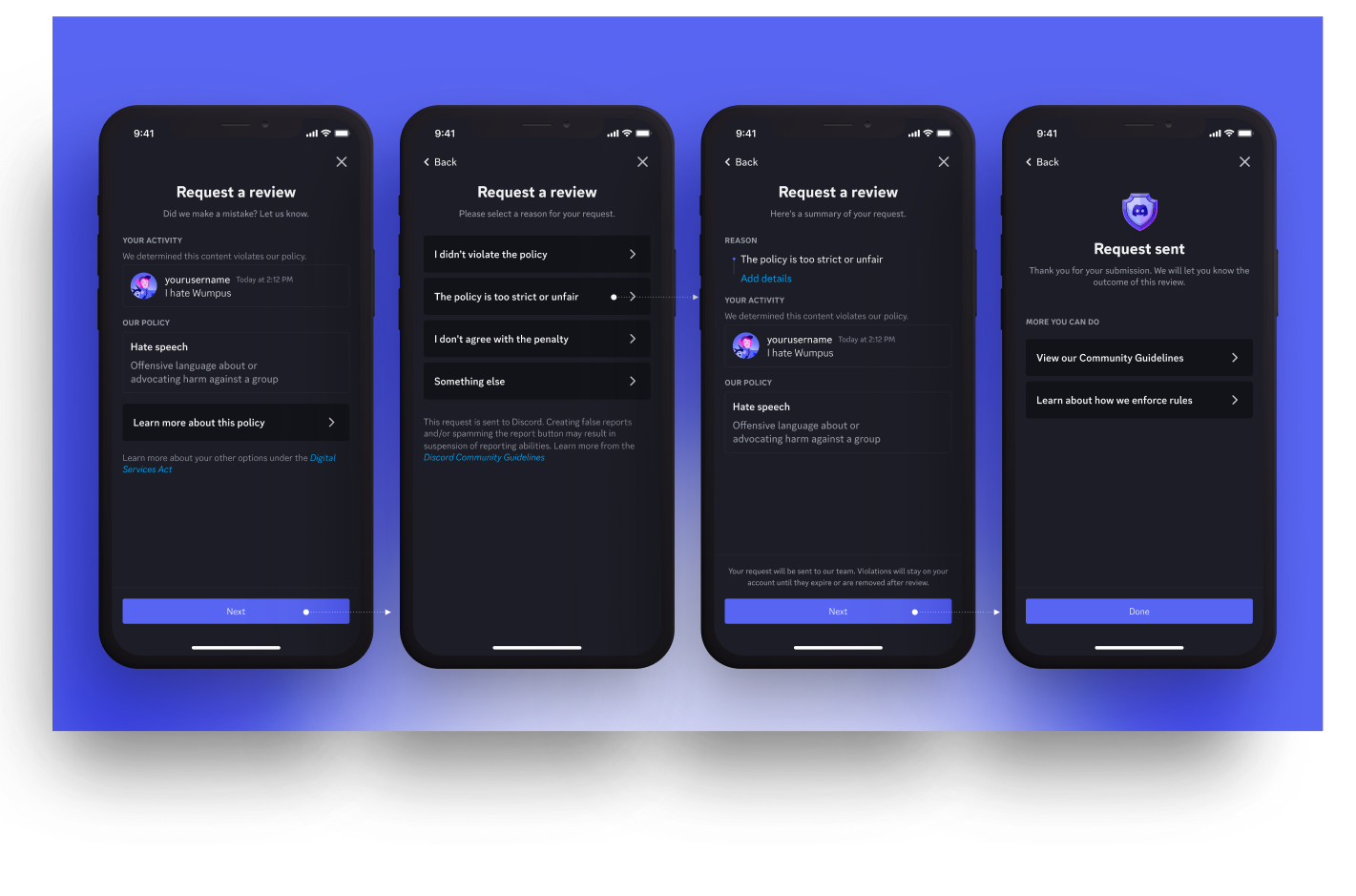
Clearer explanations also needed a clear way to disagree. We redesigned appeals as part of the same system, connecting violation details to a path for challenging Discord’s decision. People could understand the action taken against their account and request a review when they believed we got it wrong.
The Warning System launched ahead of the EU deadline and contributed to a 9% decrease in bans, or roughly 6,000 fewer bans per month, without increasing appeal volume.
More than 75% of affected users viewed their violation details, and people also actively sought out Account Standing to understand where they stood.
The result was an enforcement system that could still hold people accountable while giving more of them a chance to understand the rules and get it right.
Decrease in bans, roughly 6,000 fewer bans per month.
Viewed their violation details
Increase in appeal volume
Launched ahead of the EU deadline
The EU’s Digital Services Act set our launch deadline. We focused first on enforcement transparency, while designing a foundation for broader account health.
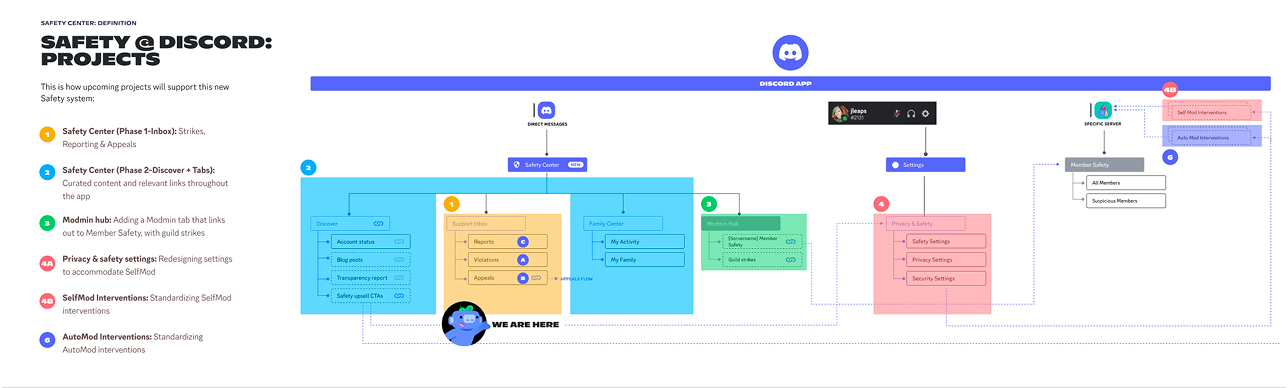
Warnings, Account Standing, and Appeals helped people understand Discord’s decisions and what they could do next. A system message leading to an inbox in Settings gave us a practical path to launch.
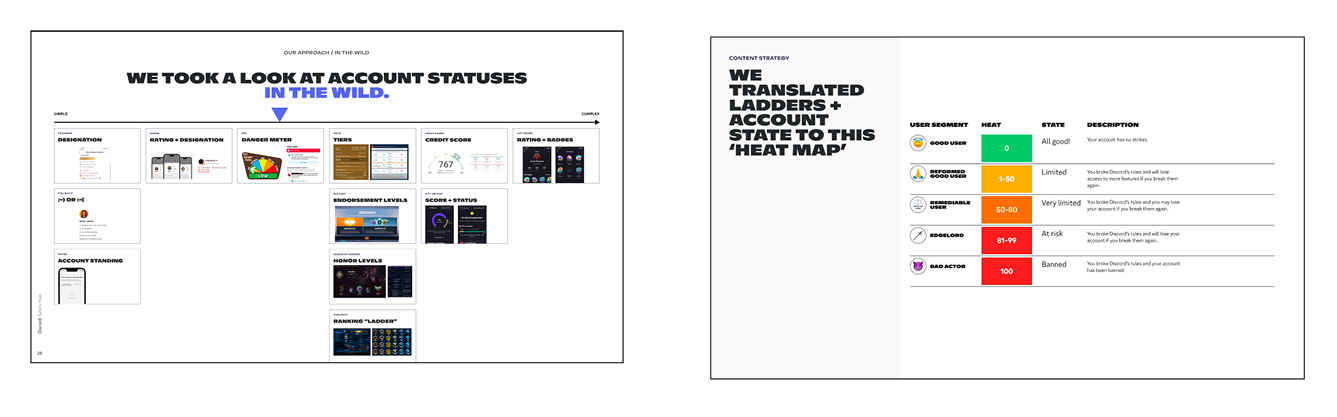
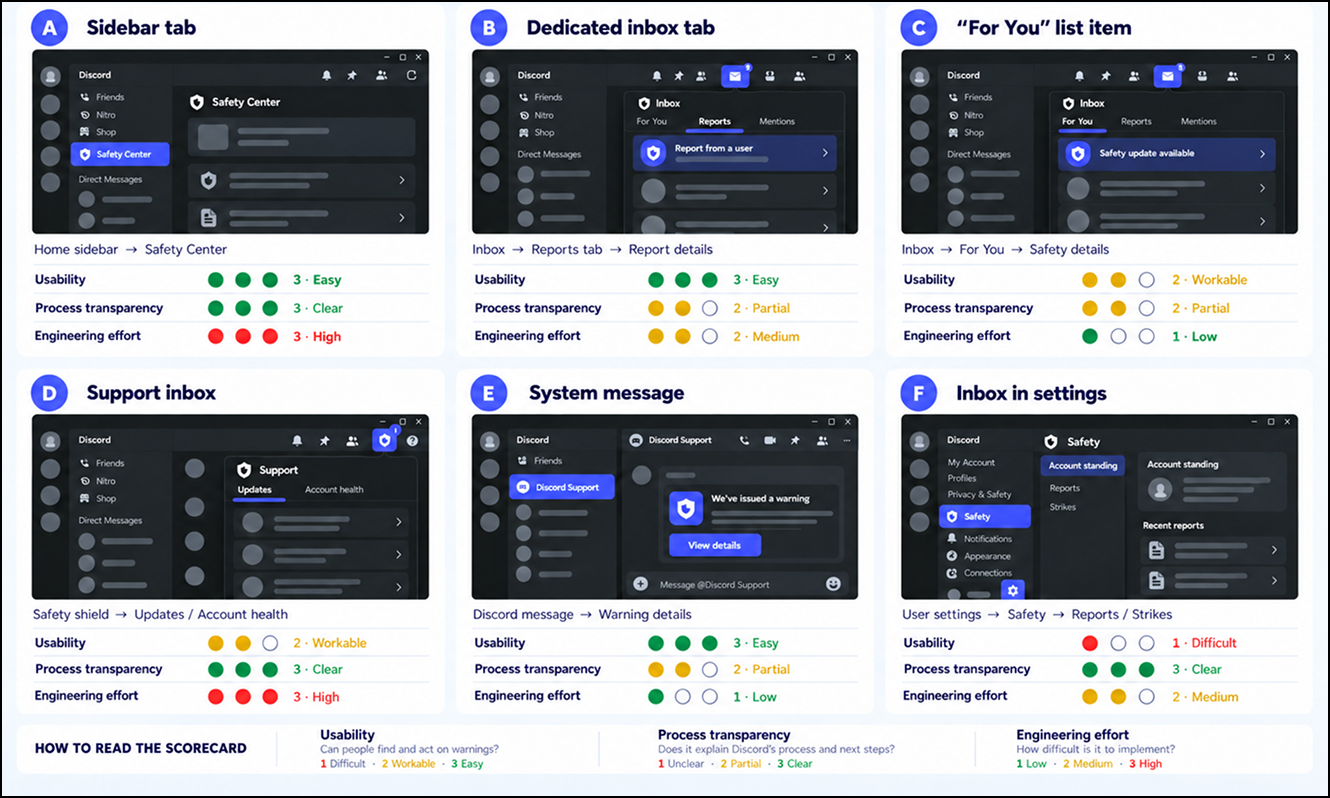
Comparison scores are retrospective design hypotheses, not research findings or engineering estimates.
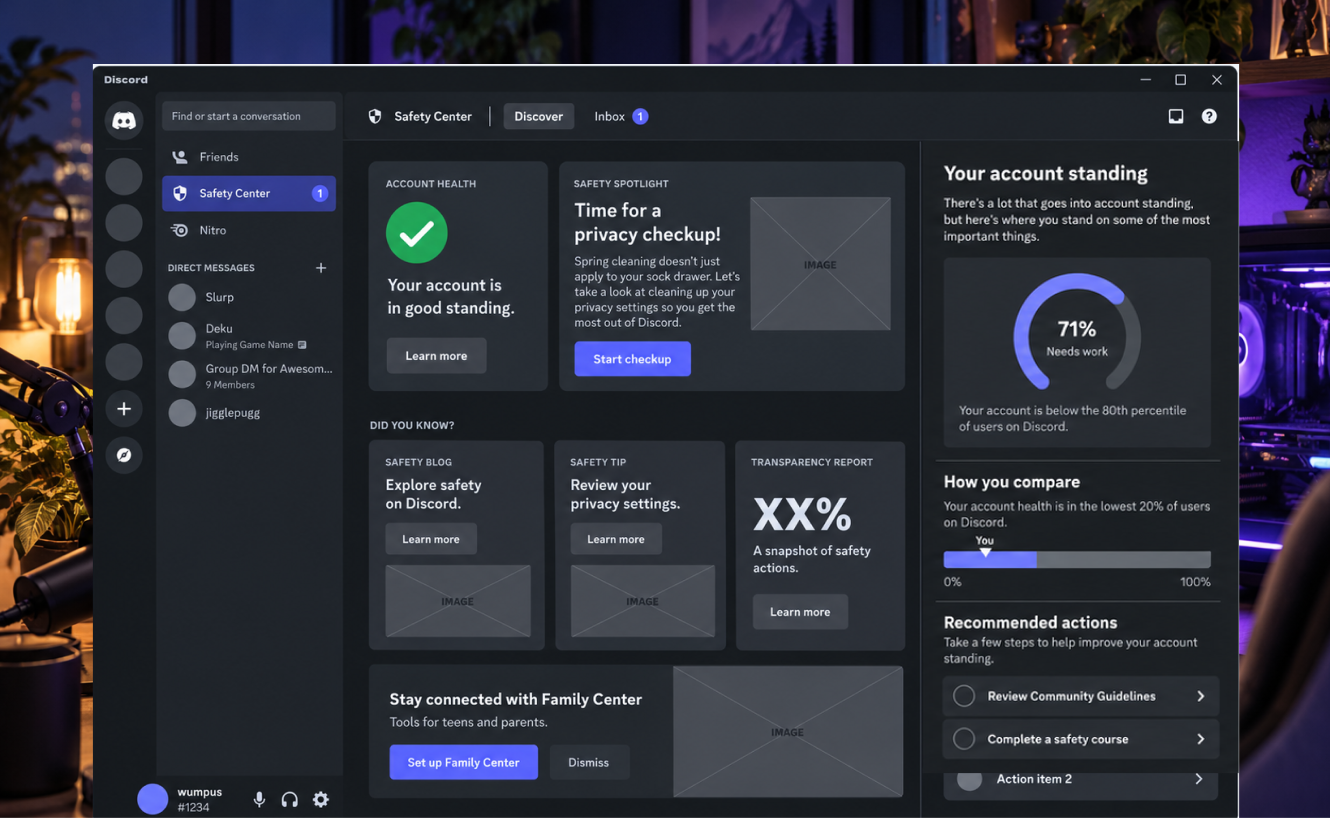
The future vision added Reports and safety resources to give people a fuller picture of their account health. A side-tab entry point would make the experience more usable and transparent, but required a larger engineering investment.
Sparking conversation between parents & teens
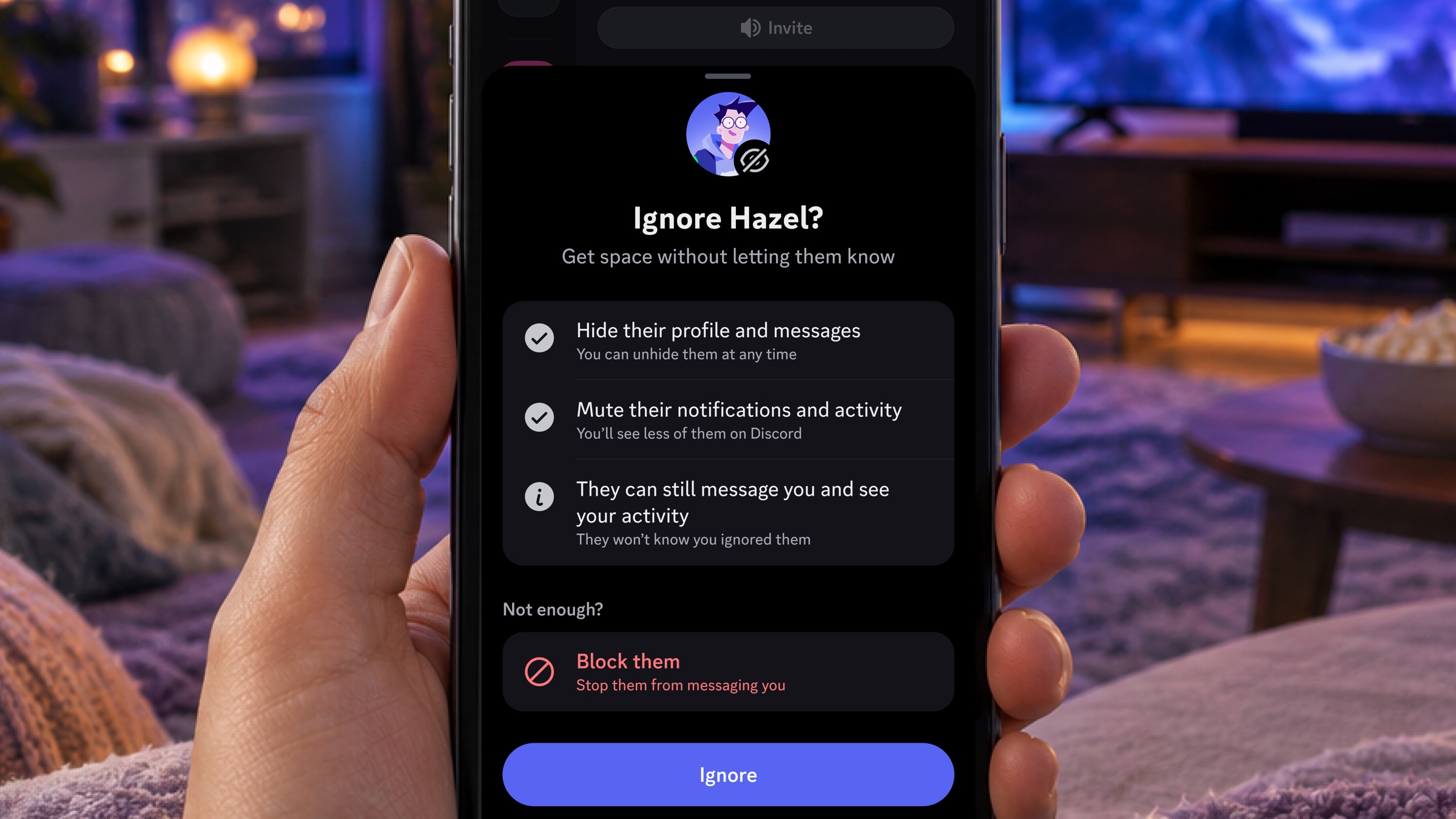
Offering a stealthy way to get space